
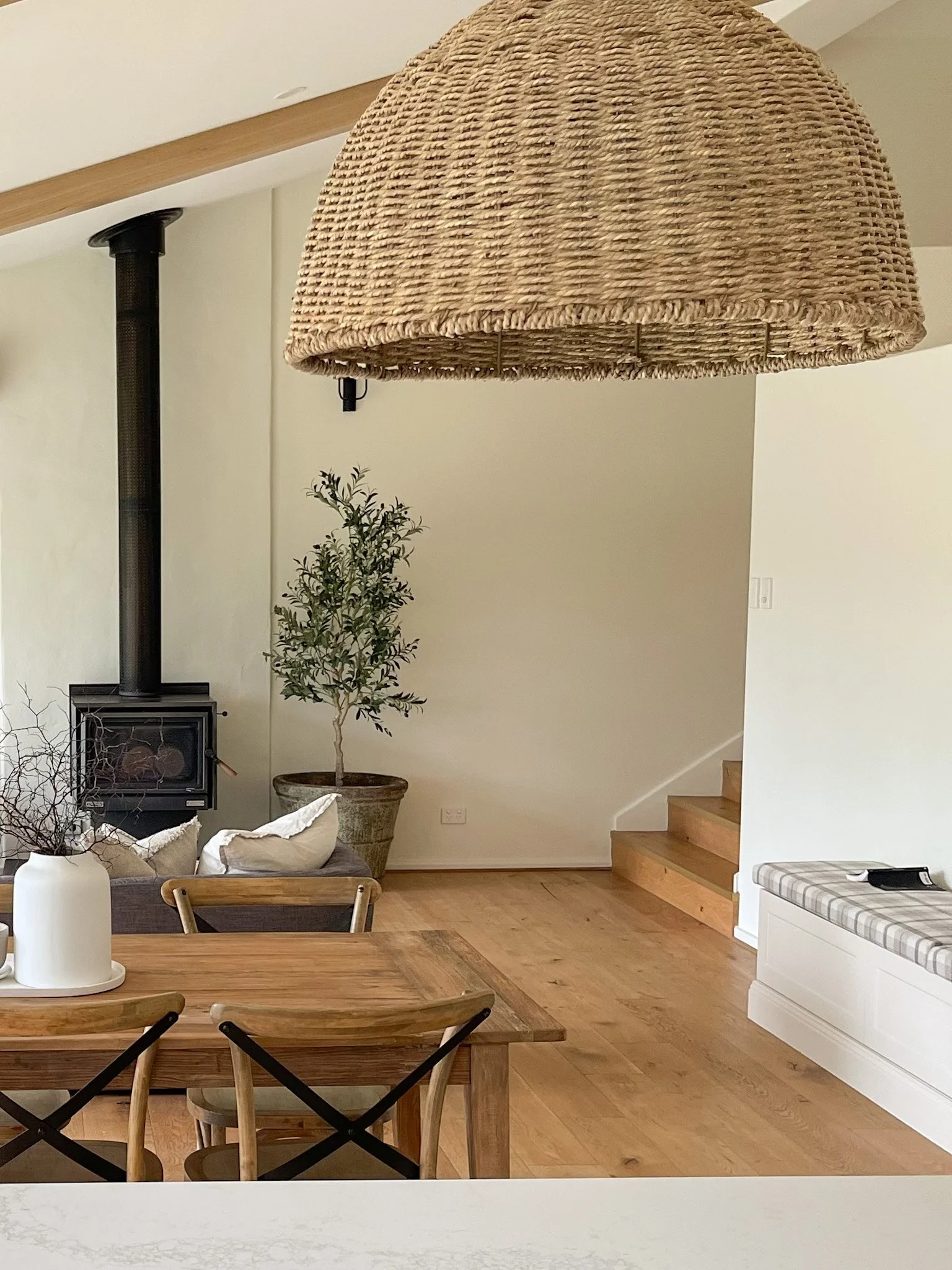
Lighting is one of the most common areas people get wrong — not because of the fixture itself, but how it’s placed. Too high, and it loses impact. Too low, and it can feel awkward within the space.
Lighting can completely transform a space, adding layers to walls, defining zones and setting a mood like no other element can. But getting the height right is what makes the difference between stylish and awkward. This guide takes the guesswork out of hanging pendants, chandeliers, and wall sconces, so your lighting looks as good as you imagined.
We’ve all been there: you’ve found the perfect pendant, chandelier, or wall sconce, booked the electrician, and then get asked the surprising question — “Where do you want it?”
Instead of leaving the decision up to the trades (no offence, but let’s be honest — lighting installed at the wrong height is one of the most common mistakes I see!), here’s a breakdown to help you confidently direct the install.
You’ll end up with a lighting feature and placement you truly love.
How High to Hang Pendants Over a Kitchen Island
Hanging Height
Pendants should sit 760–915mm above the island benchtop. This provides effective task lighting while maintaining clear sightlines across the kitchen. Going slightly lower can make a big difference — it helps anchor the island without interrupting views across the space.
Spacing
Space pendants approximately 760mm apart (measured at the widest point of each fitting). Allow at least 150mm clearance from each end of the island.
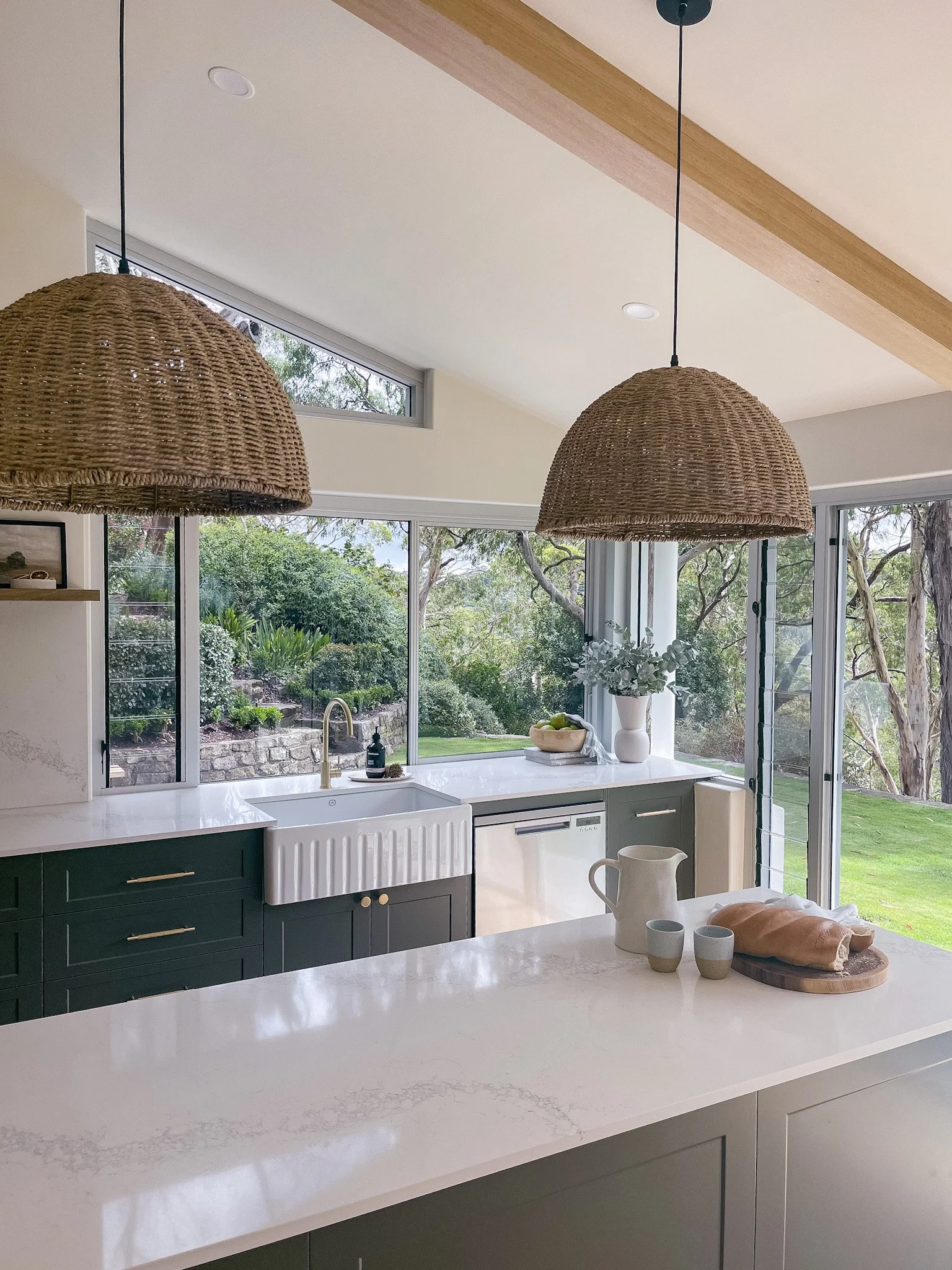
Pendant lighting at our Bundaleer House project brings a beautiful warmth to the space, with woven seagrass shades that softly highlight the ceiling beam and height.
Dining Table Lighting Height Guidelines
Standard ceiling height (2,400mm):
The bottom of the light fitting should sit between 810–915mm above the tabletop.
Higher ceilings:
Add around 75mm to the hanging height for every additional 300mm of ceiling height.
This applies to:
Linear pendants
Single pendants
Chandeliers
Pro tip: Always centre your pendant or chandelier over the dining table itself, not the exact centre of the ceiling or room. This keeps your space looking balanced and ensures the light is right where you need it. This is where I often see lights hung a little too high, which can make the setting feel disconnected rather than intimate.
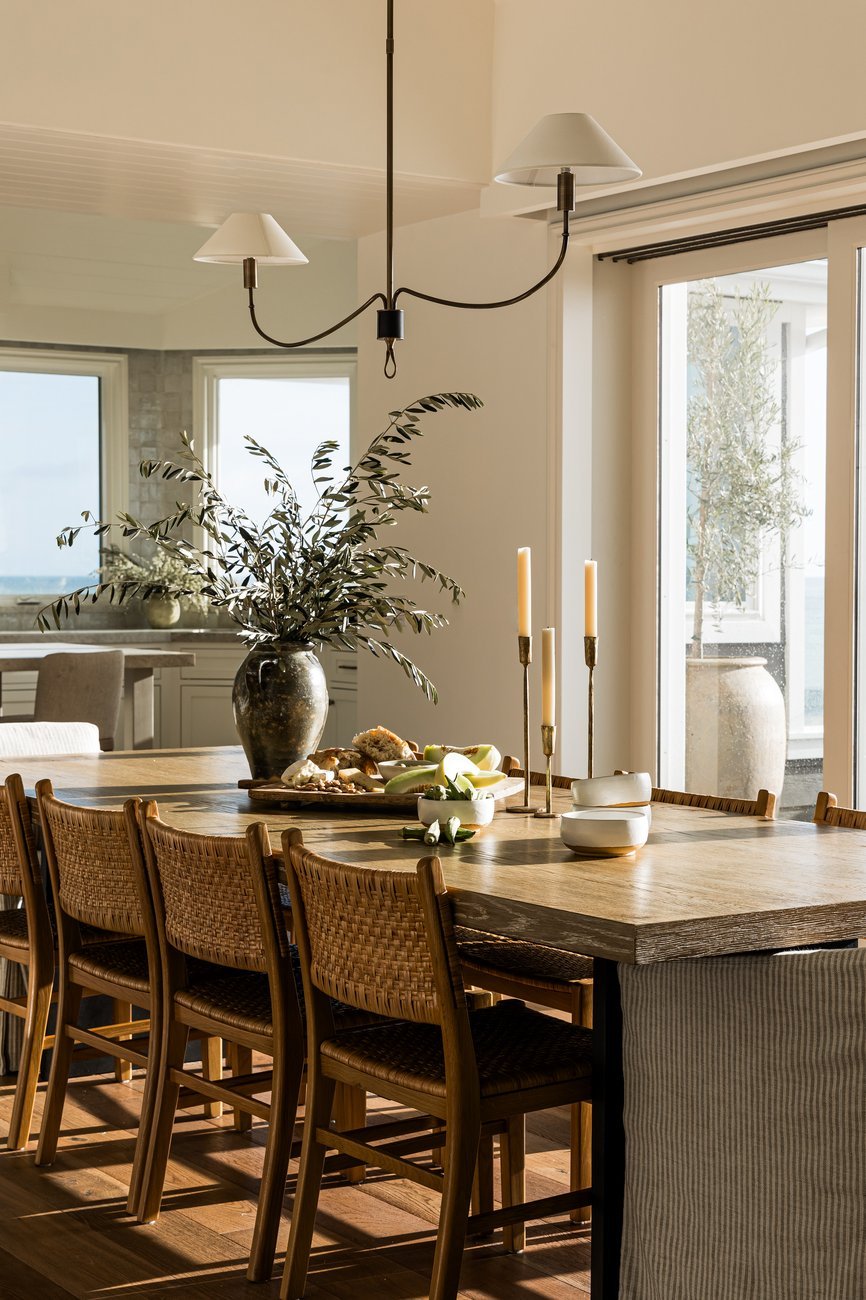
A linear chandelier defines the dining zone in this space by Californian interior design studio, Pure Salt Interiors, creating a sense of intimacy and balance.
Wall Sconce Height & Placement Guidelines
General placement
Mount the centre of the sconce 1,500–1,700mm above the finished floor—this is generally eye level and creates balanced, ambient lighting.
Bedside Wall Sconces
Position the centre of the sconce about 200–300mm above your bedside table (assuming bedside height is standard at 550–650mm).
Tip: The light should sit just above your shoulder when you’re sitting in bed, perfect for late-night reading. Placement here is key — even a small adjustment can completely change how the light interacts with the wall and surrounding details.
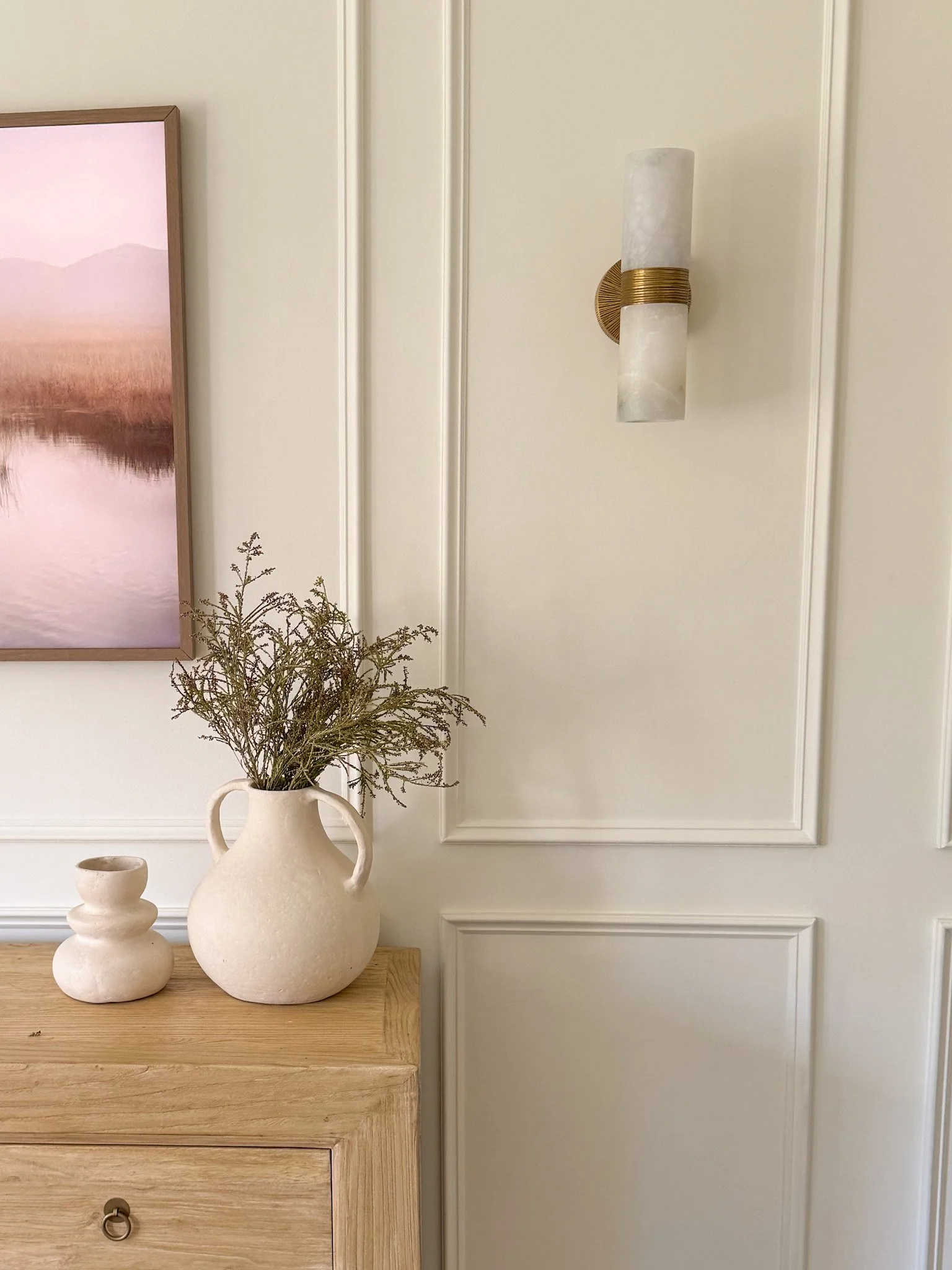
Alabaster and brass wall sconces at our Forever on Farr project bring a gentle warmth while highlighting the artwork and wall panelling detail.
Hallway & Entry Lighting Clearance Guidelines
In living areas, hallways and walkways:
Always maintain at least 2,100mm clearance from the floor to the bottom of any light fitting in living areas, hallways, and walkways. This avoids head bumps and keeps paths moving smoothly, without interrupting sightlines through the space.
When in doubt, it’s always better to hang the light slightly higher — too low is almost always more disruptive than too high.
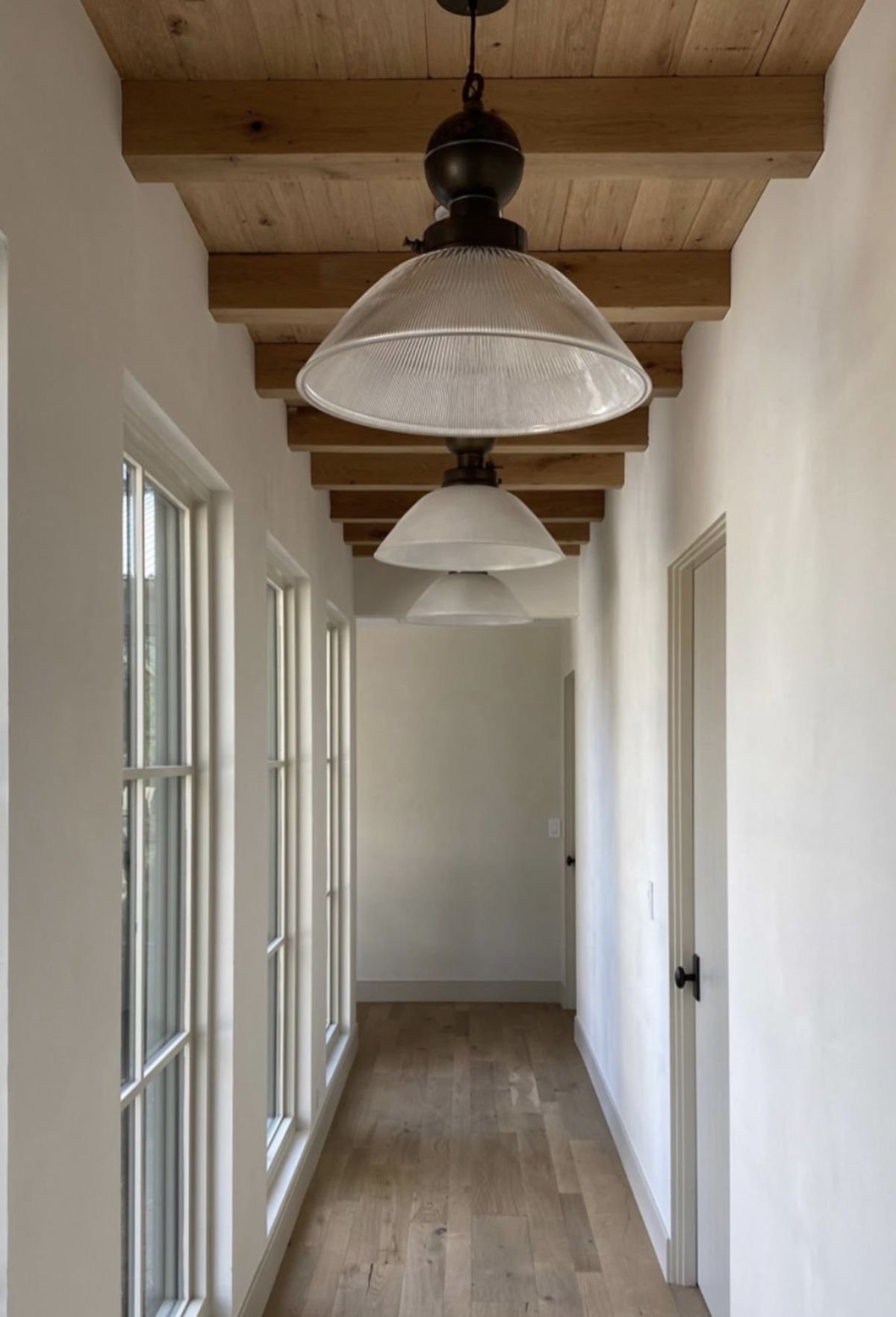
This hallway in a home by Amber Interiors is enhanced by a series of pendants, creating a gentle rhythm that draws the eye through the space.
Common Lighting Mistakes to Avoid
- Hanging lights too low (blocks sightlines and makes spaces feel heavy)
- Centring lights on the ceiling instead of over the furniture they relate to
- Ignoring ceiling height, especially in rooms with tall ceilings
- Incorrect pendant spacing—either too close together or too far apart
- Placing pendants too close to the ends of the island, making layouts feel off-balance
- Installing wall sconces at inconsistent heights (especially beside beds or mirrors)
- Not accounting for furniture height, which can vary from home to home.
- Choosing light sizes without checking scale results in fittings that feel too dominant or too small.
- Finalising heights before furniture placement (always measure after your furnishings are in place!)
Final Note
Think of these guidelines as a practical starting point — factors like your room dimensions and furniture layout will help inform the final decision. It’s always a good idea to double-check heights onsite with your electrician to make sure everything looks and works perfectly.
If you’re unsure at any stage, don’t hesitate to ask for help—adjusting heights beforehand is much easier than after installation.
If you’d like guidance tailored to your home, we offer on-site consultations across Adelaide.
Are there any other questions you have about choosing or hanging lighting in your home? Leave me a question below and I’ll get back to you!
Until next time, Charlotte x